
|
Winter in northern China has a particular kind of stillness.
Morning light arrives pale and thin. Breath hangs in the air. Street vendors pull down metal shutters earlier than usual, and grocery stores begin stacking oranges in deliberate pyramids near their entrances.
Something is approaching.
The Lunar New Year—known domestically as the Spring Festival—is the single most consequential cultural event of the year, a season when rituals long embedded in memory rise again to the surface of public life.
In mainland China, Spring Festival is not simply a holiday. It is a national change in gravity.
For a few weeks, the country behaves differently. Work calendars loosen. Transport networks strain and then adapt. Cities empty and refill. The year does not “begin” with a date as much as it begins with a movement: people going home.
- Chunyun: When the Country Moves Like a Tide
- The Week Before: Markets, Haircuts, and the Art of Closing the Year
- Reunion Dinner: The Table as a Map of the Family
- Ancestral Presence: When the Family Extends Beyond the Living
- Temple Fairs: Where Folk Religion Becomes a Street Festival
- The Spring Festival Gala: A New Ritual for a Vast Nation
- Midnight: The Old Logic of Noise
- First Days: Taboos, Luck, and the Performance of a Good Beginning
- Traveling During Spring Festival: What It Feels Like on the Ground
Chunyun: When the Country Moves Like a Tide

|
The first sign of Spring Festival is not fireworks. It is the line.
At major stations—Beijing West, Shanghai Hongqiao, Guangzhou South—crowds form with a strange mix of urgency and ritual calm. People sit on suitcases like temporary chairs. Families eat instant noodles from paper bowls. A child sleeps against a parent’s coat while a phone plays a cartoon quietly through tinny speakers.
This is Chunyun, the Spring Festival travel rush, often described as the largest annual human migration on Earth. The scale is hard to hold in the mind until you see it: tens of millions leaving megacities and industrial zones, and tens of millions returning to county towns, villages, and family courtyards.
It is not only a logistics phenomenon. It is an emotional economy.
For migrant workers, the journey home can be the one time each year they step back into the role that matters most: not employee, not tenant, not visitor in someone else’s city—but son, daughter, uncle, aunt, grandchild. The ticket becomes a proof of belonging.
In the language of Spring Festival, “going home” is not a plan. It is a promise.
The Week Before: Markets, Haircuts, and the Art of Closing the Year

|
If you arrive in China a week or two before New Year’s Eve, you feel the festival building like weather.
Markets swell. Dried seafood stacks into fragrant towers. Red couplets appear in bundles like folded flags. Fruit sellers arrange pyramids of oranges and pomelos—golden and heavy, symbols of fullness and luck. Stalls selling paper offerings do brisk business: sheets of joss paper, printed with gold, meant for the unseen world.
There is also a quieter ritual: the haircut.
In many places, hair salons become crowded because people want to “tidy” themselves before the year turns. The timing matters. Traditional belief warns against cutting hair during the New Year period in some regions, so a pre-holiday haircut becomes part of closing the year properly—like balancing accounts, like returning borrowed items, like making peace where possible.
Spring Festival is, in many ways, the world’s largest annual act of closure.
Reunion Dinner: The Table as a Map of the Family

|
New Year’s Eve is called Chúxī. In many households, it is the most important night of the year.
The reunion dinner is not just a meal. It is a rearrangement of relationships.
Seats are not random. Elders occupy the center. Dishes are chosen for meaning as much as taste—fish for surplus, dumplings for wealth, sticky rice cakes for “rising” fortunes. But the deepest symbolism is not edible. It is social.
In a country where modern life scatters families across provinces and megacities, the reunion dinner compresses distance back into one room. For a few hours, the family is restored as a complete constellation.
This is why Spring Festival can feel like a gravitational event: it pulls people back into orbit.
Ancestral Presence: When the Family Extends Beyond the Living

|
In many homes, Spring Festival is also a season of ancestral acknowledgement.
Small altars—sometimes a simple shelf, sometimes a dedicated corner—hold incense burners, fruit offerings, cups of tea or rice wine, and photographs of those who have died. On New Year’s Eve or the first morning of the year, incense may be lit so that ancestors symbolically “return” to participate.
To an outsider, this can look like religion.
To many families, it is something closer to continuity.
It is the feeling that a family is not only a group of living individuals, but a lineage—an unbroken chain—and that beginning the year without acknowledging that chain would feel incomplete.
Temple Fairs: Where Folk Religion Becomes a Street Festival

|

|
| Miaohui Temple Fairs |

|
| Nanyue Temple Fairs |
In cities like Beijing, Spring Festival brings back a tradition that turns winter streets into cultural theaters: the temple fair (miàohuì).
Historically, temple fairs were tied to religious observance—people visiting temples to pray for protection, health, and luck in the coming year. Over time, they expanded into something more worldly: a hybrid of devotion, commerce, and performance.
Walk through a temple fair and you move through layers of Chinese cultural history at once. You may see calligraphers painting blessings in black ink on red paper. You may see vendors selling sugar figurines shaped like zodiac animals. You may hear a burst of opera singing that seems too ancient for the modern city around it.
It is easy to romanticize. But temple fairs are not museums. They are alive—full of bargaining, laughter, smoke from skewers, children tugging parents toward sweets. In that chaos is preservation. Culture survives because it remains useful as joy.
The Spring Festival Gala: A New Ritual for a Vast Nation
After dinner, another ritual begins—one that belongs to modern China as much as any imperial tradition.
Families gather around the television for the Spring Festival Gala, a marathon broadcast of comedy sketches, pop performances, acrobatics, and traditional dance. In many homes, the gala plays almost like background music to conversation, mahjong, and snack-eating.
But its cultural role is notable. China is enormous, with regional dialects, cuisines, and customs that could easily fracture a shared “festival mood.” The gala functions like a national hearth—an experience consumed simultaneously across a vast geography.
It is a modern solution to an ancient need: to feel, for one night, that you belong to something larger than your own household.
Midnight: The Old Logic of Noise
Then comes midnight.
In rural areas especially, the sky is torn open by fireworks. The sound is physical. It enters the body. Children cover their ears and then beg for more. Dogs bark. Old men grin as if the noise confirms something they already knew.
Even in cities where fireworks are restricted for safety and air quality, the desire for the midnight explosion remains. The symbolism runs deep: noise drives away misfortune, clears the air, scares off the shadow of Nian, and marks the precise moment the year changes.
This is not simply celebration. It is a reenactment of protection.
It is a community insisting that the future will not arrive quietly and unchallenged.
First Days: Taboos, Luck, and the Performance of a Good Beginning
If New Year’s Eve is the climax, the first days are the careful aftermath.
In many families, the early days are lived under a moral code: avoid harsh words, avoid conflict, avoid breaking things. Debts are settled beforehand if possible. Some households avoid sweeping on the first day—lest good fortune be swept away. In some places, knives are avoided in the kitchen, as if sharpness could cut luck.
These practices can sound superstitious when listed plainly. But experienced inside a household, they often feel like an agreement to start gently.
Spring Festival is a rare time when society collectively rehearses kindness—not because everyone suddenly becomes virtuous, but because the year feels too fresh to stain.
Traveling During Spring Festival: What It Feels Like on the Ground
For travelers, mainland China during Spring Festival is a study in contrasts.
Big cities can feel quieter, almost emptied, as migrant workers and students leave. Some restaurants close for days. Streets that usually roar with traffic become strangely calm.
Yet in smaller towns and rural areas, the festival becomes more intense and communal—family visits, village feasts, firework nights, and temples crowded with incense and prayer.
If you want to witness Spring Festival’s deepest character, go where the return is visible: county towns, old neighborhoods, temple fairs, and places where the night is still loud enough to shake the windows.
Because Spring Festival in mainland China is not only a celebration of the new year.
It is the annual proof that modern life has not erased the oldest human longing:
to return,
to be recognized,
and to begin again—together.
 |
| Credit to: Luke Hayes |
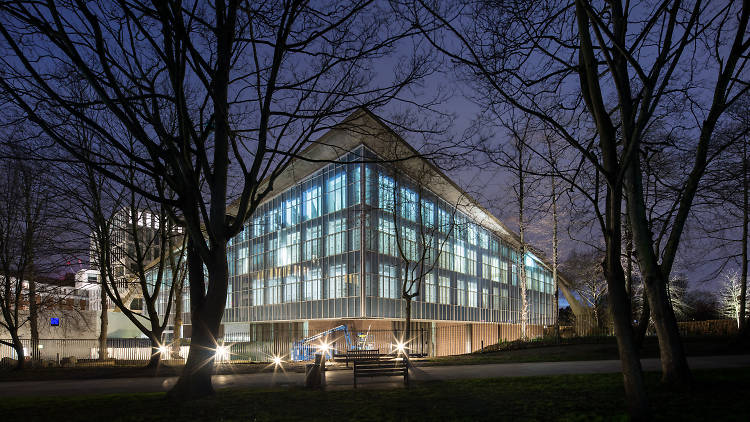
In 2016, Design Museum has been moved into the former Commonwealth Institute in Kensington, London. This landmark from the 1960s, a Grade II listed building that had stood vacant for over a decade, was developed by a design team led by John Pawson who made the building fit for a 21st century museum, whilst at the same time retaining its spatial qualities.
 |
 |
| Credit to: London Design Museum | Credit to: Orla Connolly |
- Address: Design Museum, 224-238 Kensington High Street, London W8 6AG.
- Open Times: 10:00 - 18:00 daily
- Contact: +44 20 3862 5900
- Booking Office: +44 20 3862 5937 Monday to Friday (10:00 to 17:00). For enquiries outside of these hours, submit an online enquiry.
- Membership: +44 20 3862 5933 Monday to Friday (10:00 to 17:00). For enquiries outside of these hours, submit an online enquiry.
- Learning and School Group Visits: +44 20 3862 5937 Monday to Friday (10:00 to 17:00). For enquiries outside of these hours, submit an online enquiry.
- Press Enquiries: +44 20 3862 5914. For general enquiries please call +44 20 3862 5900.
- Shop: +44 20 3862 5938
- Support The Museum: +44 20 3862 5932
- Venue Hire: +44 20 3862 5864 or +44 20 3862 5865
- Touring Exhibitions: +44 20 3862 5883
- Volunteering: +44 20 3862 5875
- Object Donations: +44 20 3862 5874
- For Further Information Visit: The Design Museum
OLD DESIGN MUSEUM
|| |
| Credit to: Melting Butter |
 |
 |
| Credit to: Arch Daily | Credit to: Jaguar Life |
 |
| Credit to: European Trips |
 |
 |
| Credit to: European Trips | Credit to: European Trips |
 |
 |
| Credit to: European Trips | Credit to: European Trips |
 |
 |
| Credit to: Nigelclare | Credit to: Nigelclare |
NEW DESIGN MUSEUM
|| |
| Credit to: Gravity Road |
 |
| Credit to: Luke Hayes |
 |
| Credit to: Gareth Gardner |
 |
| Credit to: Luc Boegly & Sergio Grazia |
 |
| Credit to: Luc Boegly & Sergio Grazia |
 |
| Credit to: Gareth Gardner |
 |
| Credit to: Luc Boegly & Sergio Grazia |
 |
| Credit to: Luc Boegly & Sergio Grazia |
EXHIBITION
||- Beazley Designs of The Year
- Date and Time: Dec 24, 2016 - Feb 19, 2017 at 10.00 am (The Design Musuem closes at 2pm on Christmas Eve).
- Price: Adult £10, Student/Concession £7.50 (concession tickets include seniors/over 60 years and job seekers), Family (1 adult + 3 children) £17, Family (2 adults + 3 children) £24, Child (6 - 15 years) £5, Children under 6 years free, and Members free.
- Notes: 10% discount is applied when booking 10 or more tickets online. Alternatively, please contact the Bookings Office (Mon - Fri 10:00 to 17:00) on +44 20 3862 5937 or +44 20 3862 5900. The recommended time for viewing this exhibition is 1 hour.
- Fear and Love: Reactions to A Complex World
- Date and Time: Nov 24, 2016 - Apr 23, 2017 at 10.00 am (The Design Musuem closes at 2pm on Christmas Eve).
- Price: Adult £14, Student/Concession £10.50 (concession tickets include seniors/over 60 years and job seekers), Family (1 adult + 3 children) £22, Family (2 adults + 3 children) £32, Child (6 - 15 years) £7, Children under 6 years free, and Members free.
- Notes: 10% discount is applied when booking 10 or more tickets online. Alternatively, please contact the Bookings Office (Mon - Fri 10;00 to 17:00) on +44 20 3862 5937 or +44 20 3862 5900. The recommended time for viewing this exhibition is 1 hour.
- Designer Maker User
- Free Display: Designer Maker User is free to enter.
- Ages: Designer Maker User is a family-friendly exhibition and includes Explorer Kits on the Work in Progress table for ages 5 - 11.
- Opening Times: Open daily 10:00 – 18:00 (last admission 17:00). Closed on Christmas Day and Boxing Day. The recommended time for viewing this exhibition is 1 hour.
- Schools: The new Design Museum welcomes schools, colleges and universities for self-guided visits to all exhibitions.
- Designers in Residence 2016: Open
- The Making of the Design Museum
- Date: Nov 24, 2016 - Feb, 2017.
- A free temporary display in the Design Museum's atrium mezzanine level.
- Imagine Moscow: Architecture, Propaganda, Revolution
- Date and Time: Mar 15 - Jun 4, 2017 at 10.00 am.
- Tickets will be available in December 2016.
- California
- Date and Time: May 24 - Oct 15, 2017 at 10.00 am.
- Tickets will be available in 2017.
- Hella Jongerius: Breathing Colour
- Date and Time: Jun 28 - Sep 24, 2017 at 10.00 am.
- Tickets will be available in early 2017.
 |
| Credit to: Luc Boegly & Sergio Grazia |
 |
| Credit to: Luke Hayes |
 |
 |
| Credit to: Luke Hayes | Credit to: Luke Hayes |
 |
 |
| Credit to: Luke Hayes | Credit to: Luke Hayes |
 |
| Credit to: Luc Boegly & Sergio Grazia |
 |
 |
| Credit to: Luke Hayes | Credit to: Luke Hayes |
 |
 |
| Credit to: Luke Hayes | Credit to: Luke Hayes |
 |
 |
| Credit to: Luke Hayes | Credit to: Luke Hayes |
BAR, CAFE, AND RESTAURANT
||Adress:
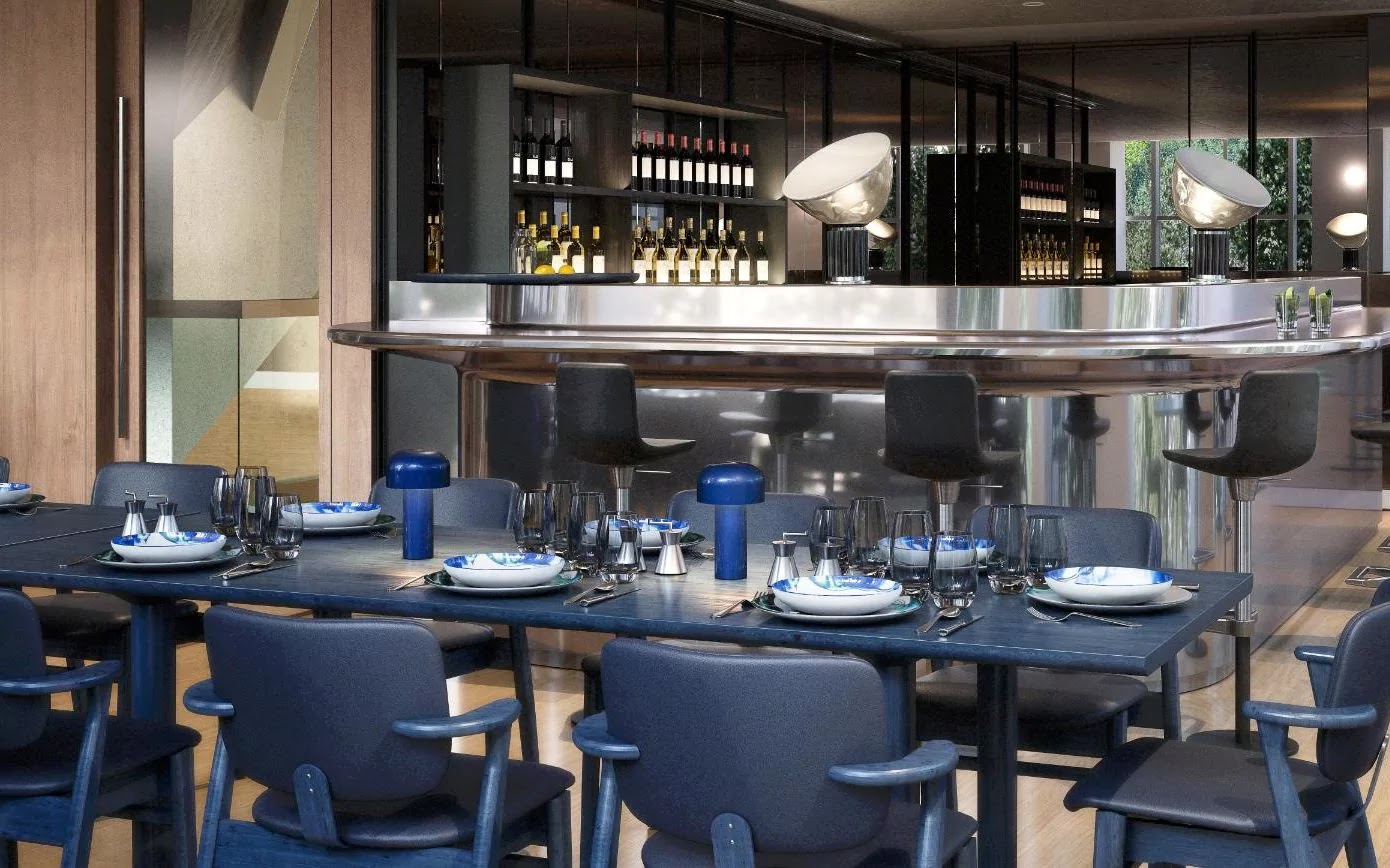
- Parabola, The Design Museum, Bar – Café – Restaurant, 224–238 Kensington High St, London W8 6AG
- Monday to Wednesday 10:00 - 23:00
- Thursday to Saturday 10:00 - 23:30
- Sunday 10:00 - 18:00
- Coffee & Juice Counter: Open daily 10am - 18:00
- Call: +44 (0)20 79408795
 |
| Credit to: Telegraph |
 |
| Credit to: Telegraph |
 |
| Credit to: Business Insider UK |
SHOP
||- High Street Shop
- Address: 224-238 Kensington High Street London, W8 6AG
- Opening times: 10am-6pm daily, with late opening on Thursday until 7pm
- Atrium Shop
- Address: ground floor in the atrium of Design Museum
- Opening times: 10am-6pm daily
 |
| Credit to: Business Inside UK |
 |
| Credit to: The Design Museum |
 |
| Credit to: Business Inside UK |
 |
| Credit to: The Design Museum |
LOGO
|| |
 |
| Credit to: Samlee | Credit to: Samlee |
 |
| Credit to: Phillips |
Source: The Design Museum, Time Out, Wikipedia, and Business Insider UK.


